

Someone opens their favorite AI coding assistant and types a prompt. "Build me a full-stack SaaS app with user authentication, a Postgres database, Stripe payments, and an admin dashboard." Twenty minutes later, they have a working application. The auth flow works. The payments go through. The dashboard looks good. They push it to production that same afternoon. What they did not do is check whether the authentication has session fixation vulnerabilities, whether the API endpoints are vulnerable to injection, whether the payment flow exposes card data in client-side requests, or whether they forgot to enable Row Level Security on their Supabase database, leaving every row of client and personal data publicly readable by any authenticated user. This is vibe coding in 2026.
The barrier to building software has dropped to nearly zero. Anyone with an idea and a natural language prompt can ship a product. But the barrier to securing that software has not moved at all. Millions of applications are being built by people who have never heard of OWASP, have never run a penetration test, and would not know where to start if they tried. The code works. Whether it is safe is a completely different question.
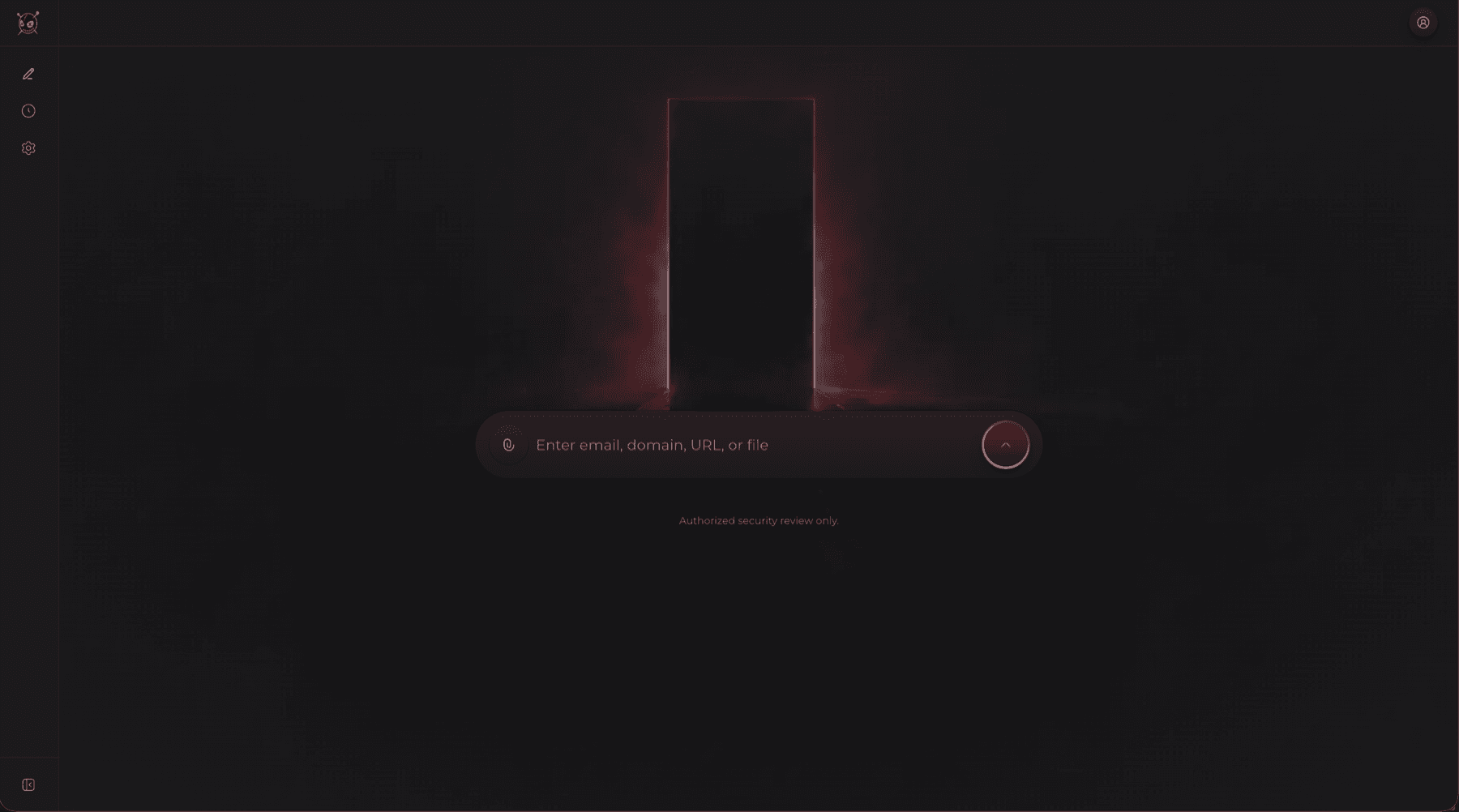
I worked on a platform built to address this exact gap. An adversarial penetration testing tool that thinks the way an attacker does, not the way a compliance checklist does. It combines dozens of security testing capabilities into a single interface and is smart enough to figure out which ones to run against your specific target.
A Hundred Tools, A Thousand Tabs
Here is the thing most people do not realize about penetration testing. There is no single tool that does it all. You need one tool for subdomain enumeration, another for port scanning, another for web application fuzzing, another for credential testing, another for SSL/TLS analysis, another for DNS reconnaissance, another for CMS detection, and yet another for API endpoint discovery. Each tool has its own syntax, its own output format, and its own set of quirks you only learn after hours of frustration.
A typical penetration testing engagement means juggling Nmap, Burp Suite, Nikto, ffuf, subfinder, httpx, nuclei, and a dozen others. Even experienced security professionals spend a significant chunk of their time just wrangling the toolchain rather than actually finding vulnerabilities. You run a scan in one tool, export the results, feed them into another tool, cross-reference with a third, and manually piece together a picture of the target's exposure. It is tedious, error-prone, and slow.
Now think about the person who just vibe-coded their first SaaS product and shipped it to real users. They have no security background. They have never touched a terminal scanner. The gap between "I built something that works" and "I know it is secure" has never been wider. And that gap is where attackers live.
One Platform, Every Angle
What if one platform handled all of it? Dark reconnaissance, port scanning, vulnerability scanning, external penetration testing, CMS-specific checks, credential testing, SSL/TLS analysis, all running from a single interface. No tab switching. No manual correlation. No stitching together outputs from five different scanners.
That is what we built. You scope your target, hit start, and the platform runs a comprehensive assessment across every attack surface it can find. It maps subdomains, fingerprints services, probes for vulnerabilities, and tests for misconfigurations. One scan gives you a complete view of your exposure.
The platform does not run theoretical checks against a database of known CVEs and call it a day. It uses real attacker tactics. It chains vulnerabilities together to find attack paths the way an actual adversary would. A misconfigured CORS header alone might be low severity. But chained with an exposed admin endpoint and weak credentials, it becomes a path to full compromise. That kind of contextual analysis is what separates a vulnerability scanner from an actual penetration test.
Smart Enough to Know What to Run
Not every target needs every module. A WordPress site needs completely different tests than a custom Node.js API. A target with dozens of exposed subdomains needs reconnaissance tools that a single-page application simply does not. Running every scan against every target is wasteful and noisy. It floods you with irrelevant findings and buries the ones that actually matter.
The platform detects what is running on the target and selects the appropriate testing modules automatically. It identifies the technology stack, maps the attack surface, and runs only the scans that are relevant. If it finds WordPress, it pulls in WordPress-specific checks. If it detects an API gateway, it runs API-focused tests. This is not a "run everything and hope" approach. It is targeted, intelligent, and fast.
This matters even more for continuous testing. As your infrastructure changes, as new deployments go live, new subdomains appear, and new endpoints get exposed, the platform re-validates your security posture automatically. Security is not a one-time checkbox you tick before launch. It is a continuous process that needs to keep pace with how fast you ship.
Reports That Actually Get Read
Most penetration test reports are 200-page PDFs that nobody reads. The engineers who need to fix the vulnerabilities want technical detail, reproduction steps, and remediation guidance. The executives who need to approve the budget want a one-page summary with risk scores and business impact. Traditional pen test deliverables force someone to manually write both, and the result is usually a report that satisfies neither audience.
The platform generates dual-layer reports from a single scan. Executive summaries with risk scoring and business impact for leadership. Detailed technical findings with evidence, reproduction steps, and remediation guidance for the security team. No manual report writing. No copying findings from a terminal into a Word document at 2 AM. The report is ready when the scan is done.
Vibe coding is not going away. The volume of AI-generated code going to production will only increase. Every week, more applications are being shipped by people who build fast and learn security later, if they learn it at all. Penetration testing needs to become as accessible as the tools that generate the code in the first place. That is the problem this platform was built to solve.